16 March 2026
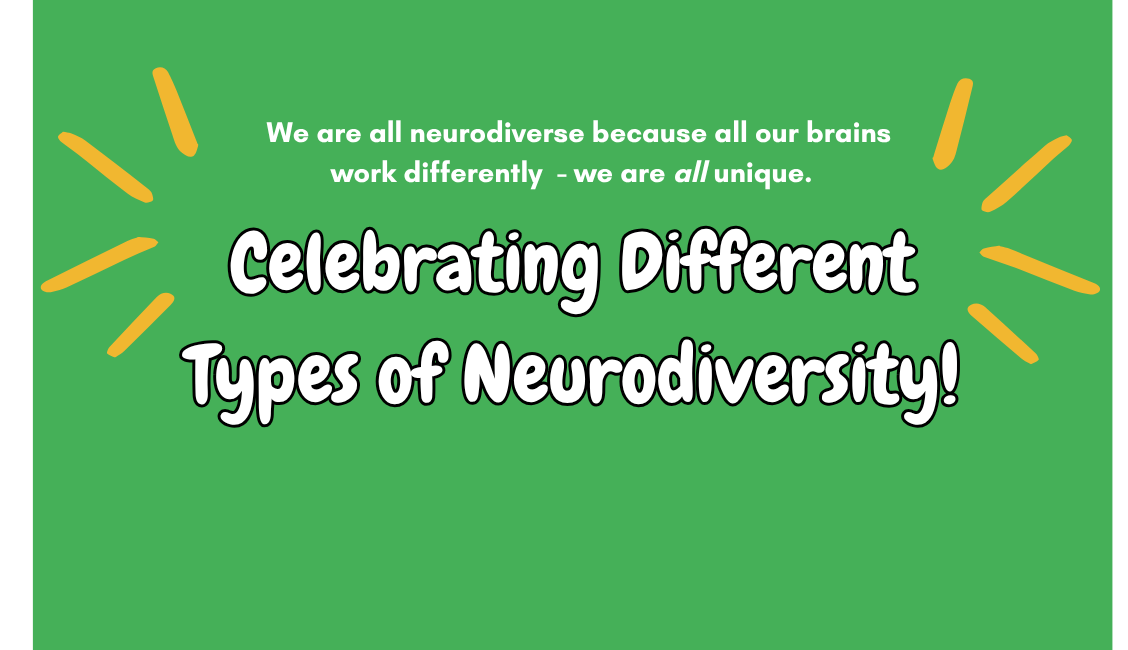
Neurodiversity is the idea that everyone’s brain works in different ways.
These differences are natural and part of human diversity. Like everyone, neurodivergent people can experience both strengths and challenges, and everyone’s experiences will be different.
Understanding neurodiversity helps us build environments and tailor therapies so that young people feel supported, accepted and able to thrive.
Every brain has its own strengths, challenges, and ways of experiencing the world.
At Bromley Y, we believe that understanding neurodiversity helps us create more supportive environments where young people can thrive. We provide emotional wellbeing support, but do not offer diagnosis. If you would like further information regarding assessment for neurodivergent needs, please talk to your school or GP.
No two brains are the same 🧠
Neurodiversity includes a range of ways that people think, learn and experience the world.
Some examples include:
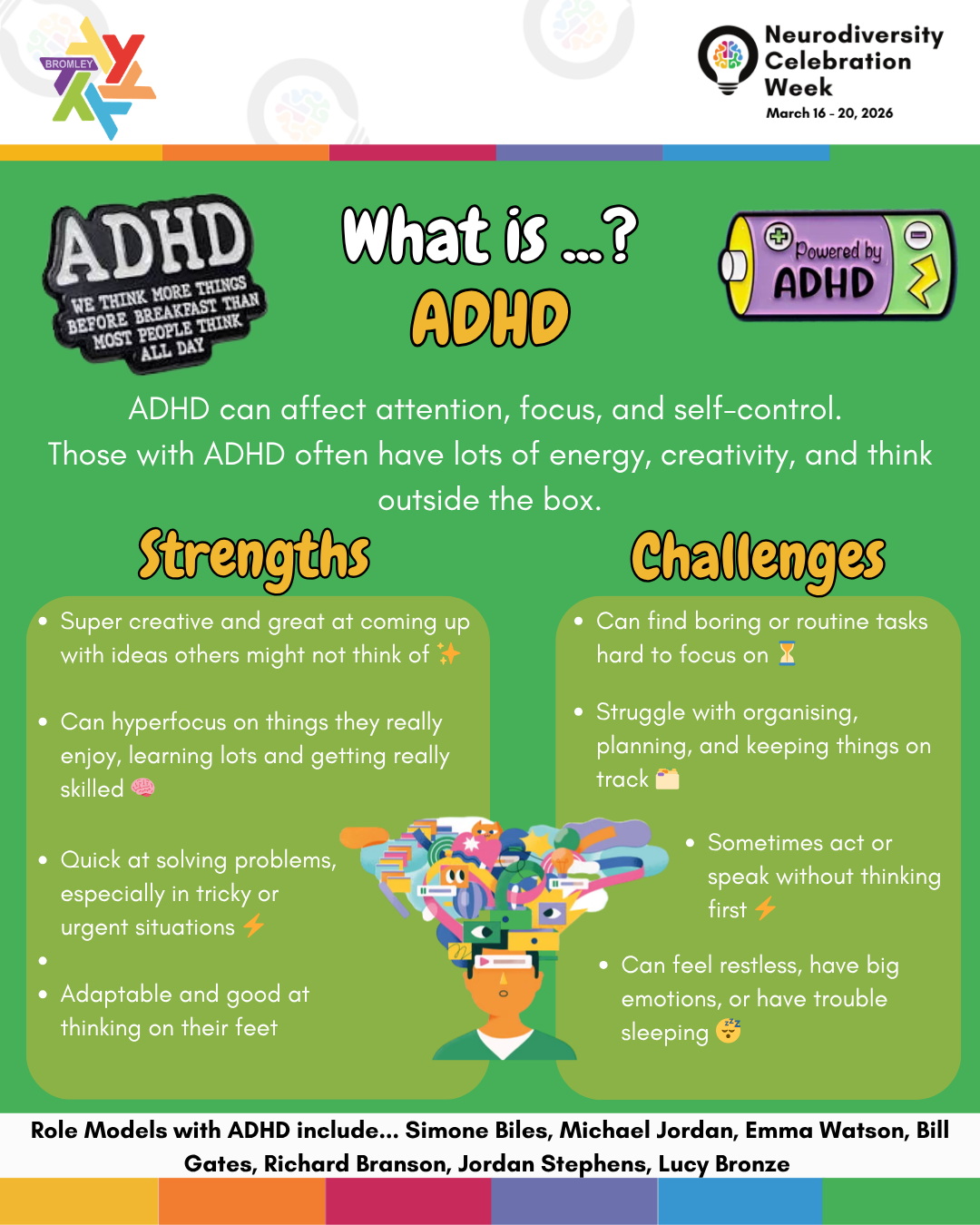
⚡ ADHD – creativity, energy, thinking outside the box
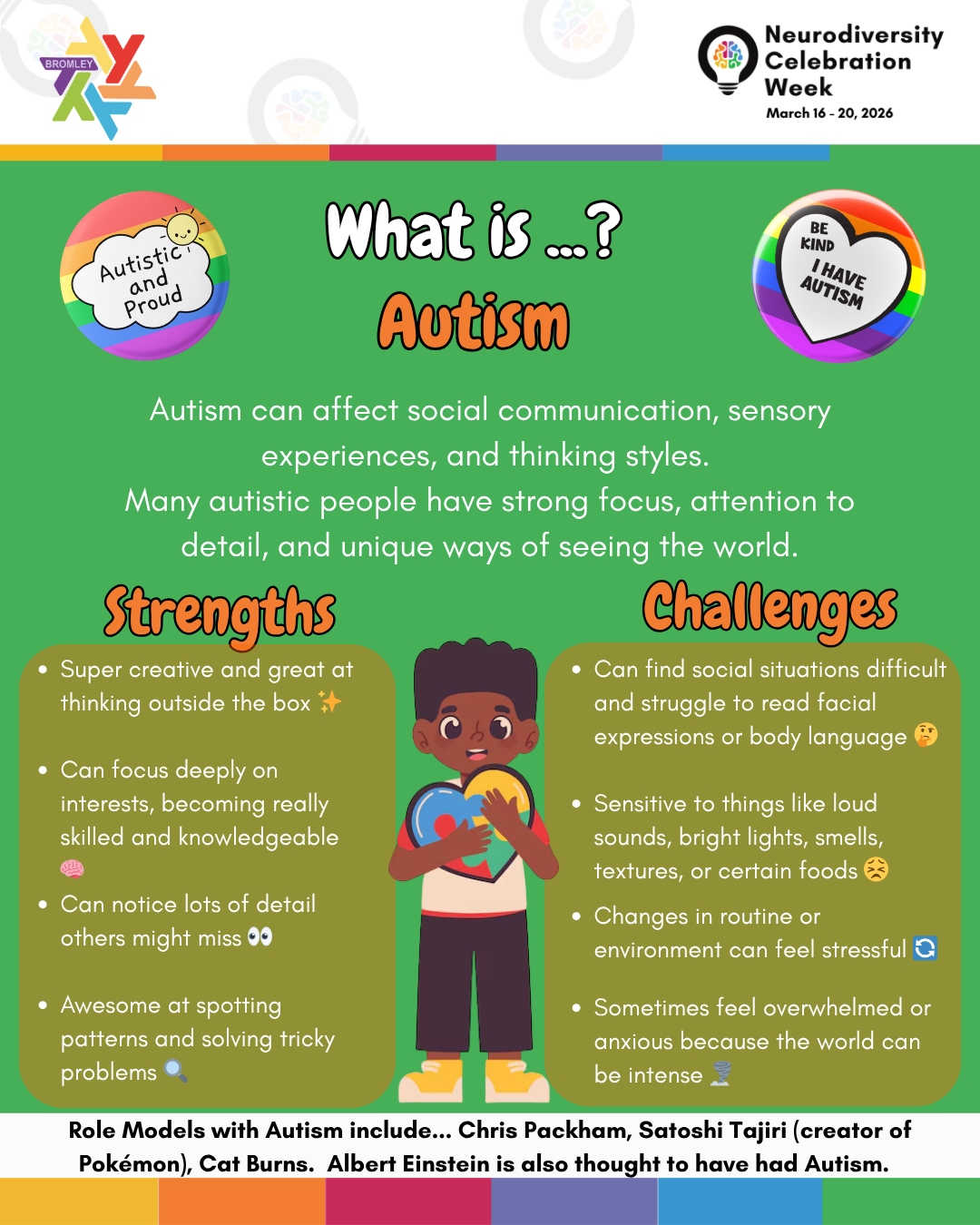
🧩 Autism – strong focus, honesty, attention to detail
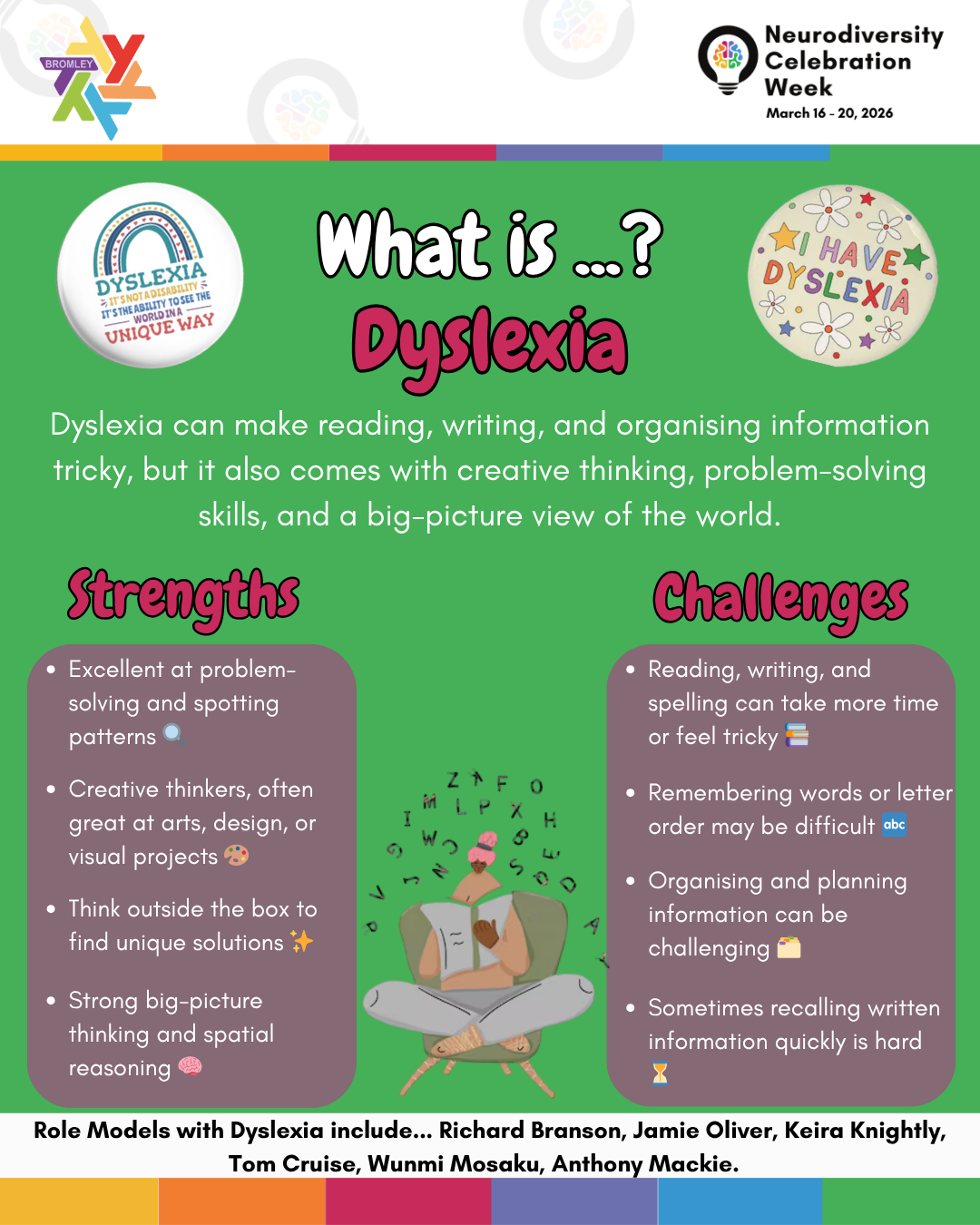
📚 Dyslexia – creative thinking, problem-solving, big-picture ideas
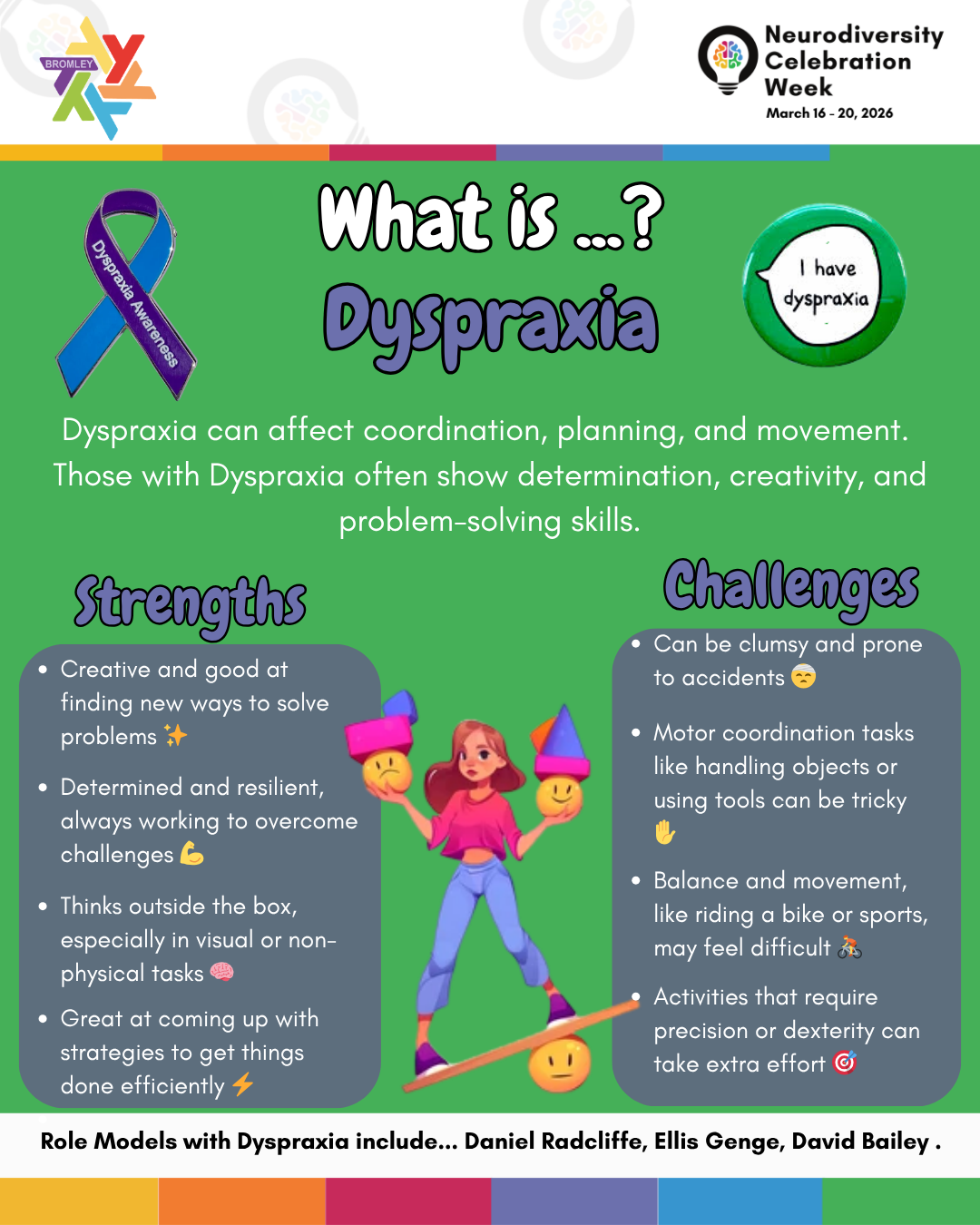
🎯 Dyspraxia – determination, creativity, resilience
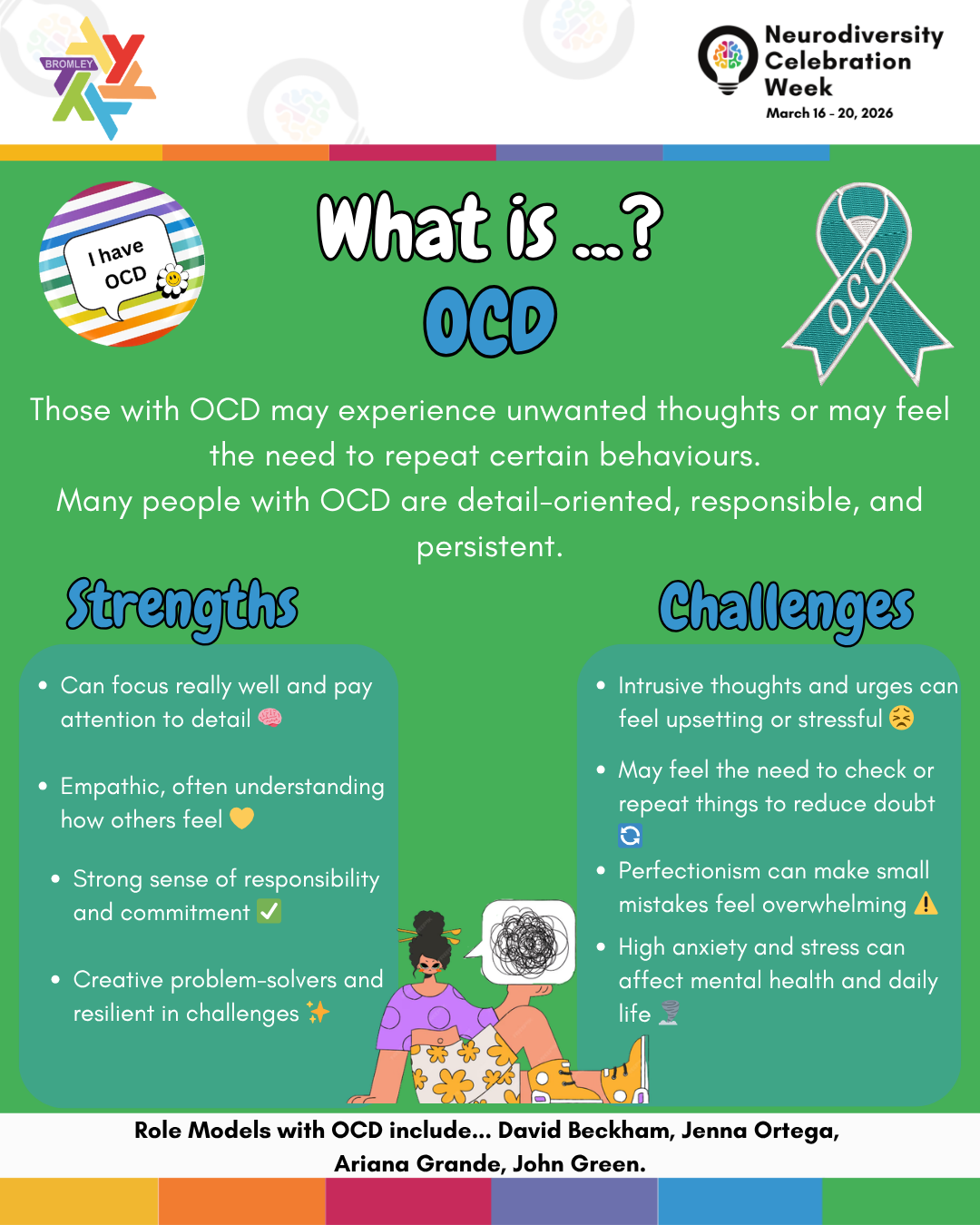
🔄 OCD – strong awareness, responsibility, attention to detail
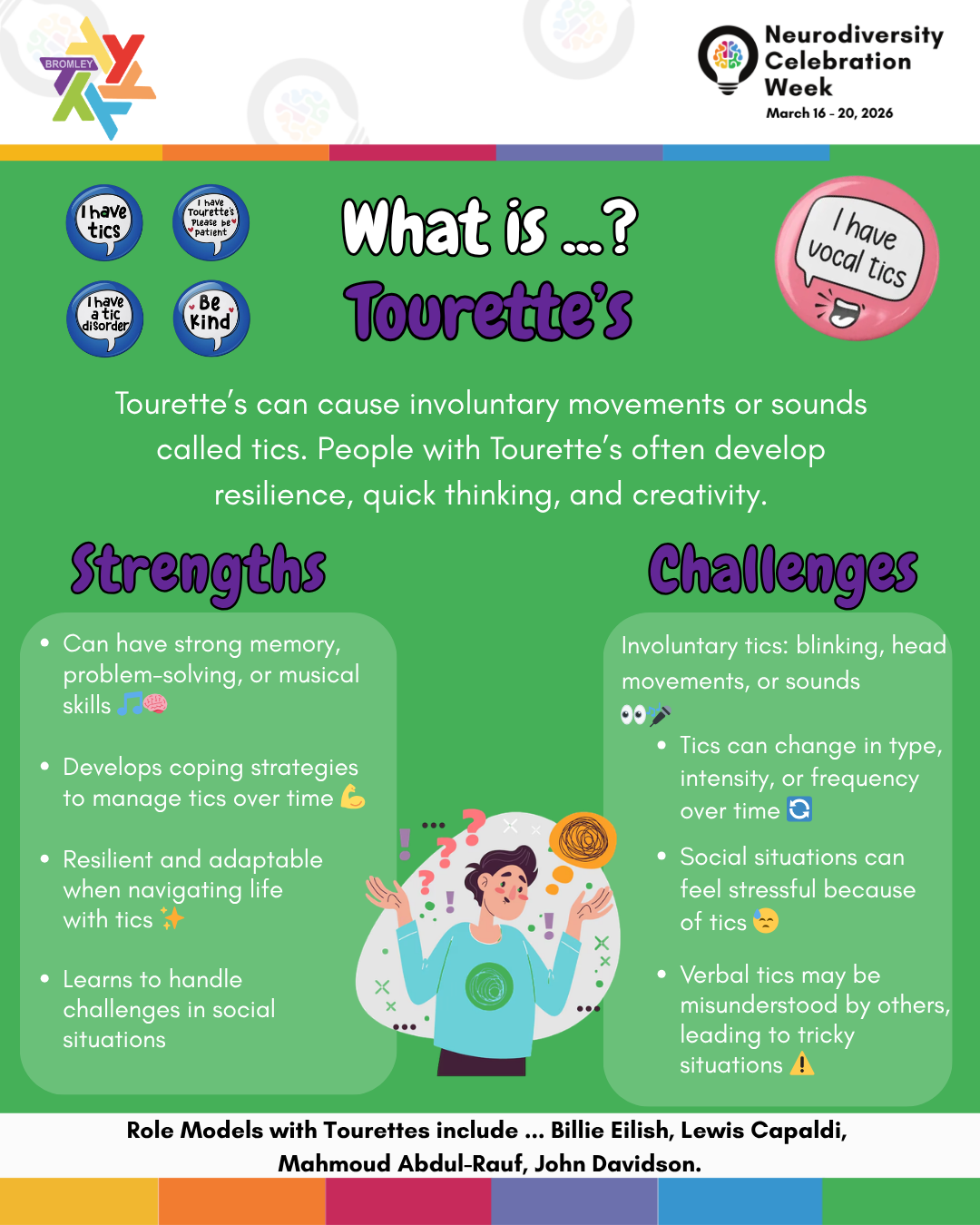
🎤 Tourette’s – creativity, resilience, quick thinking