26 May 2026
At Bromley Y, we are committed to supporting the Government’s priorities around early intervention, resilience-building, and improving outcomes for children and young people with SEND. We recognise the importance of collaborative working, shared learning, and effective information sharing to help keep children and young people safe, while ensuring families can access the right support at the right time so they can thrive both emotionally and educationally.
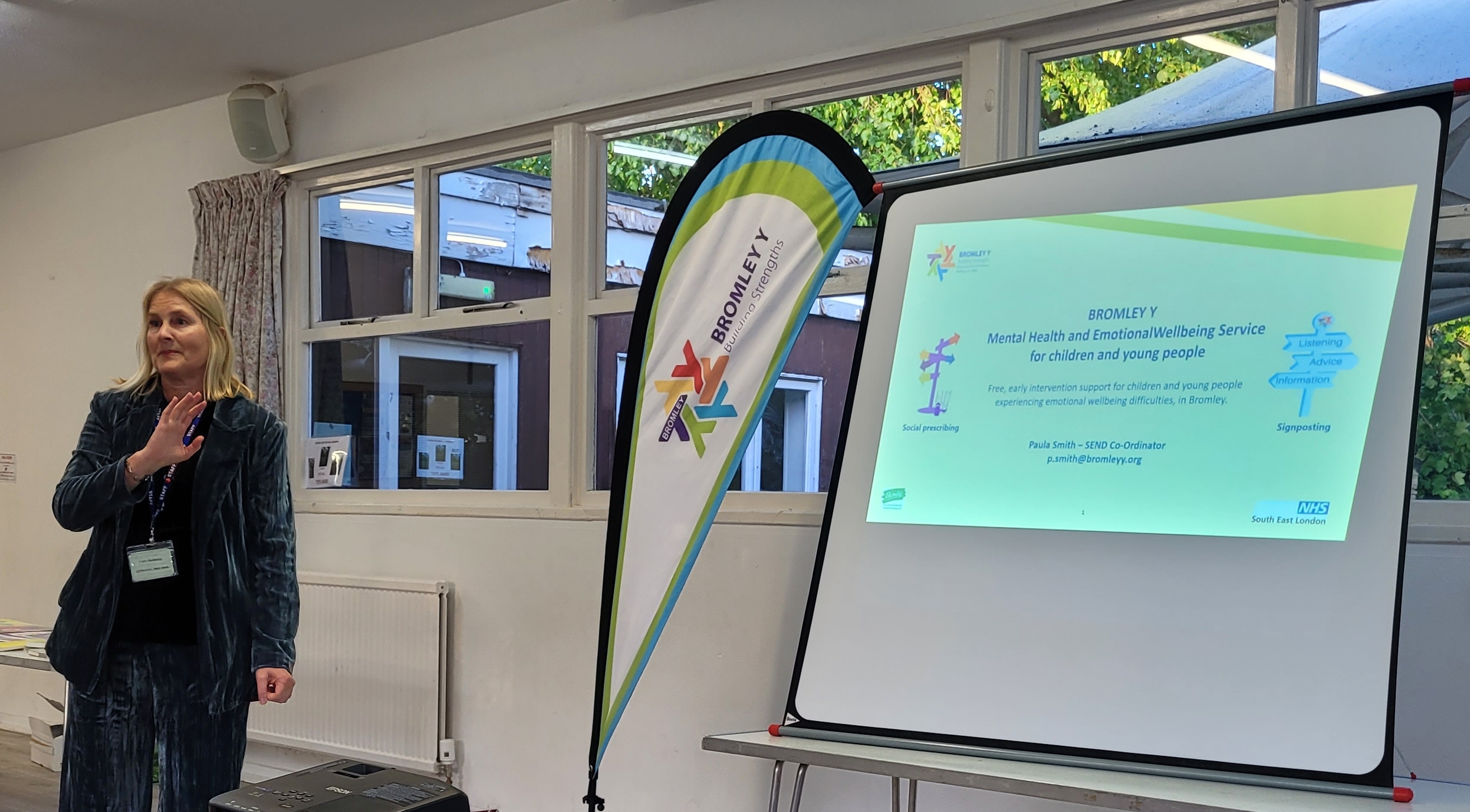
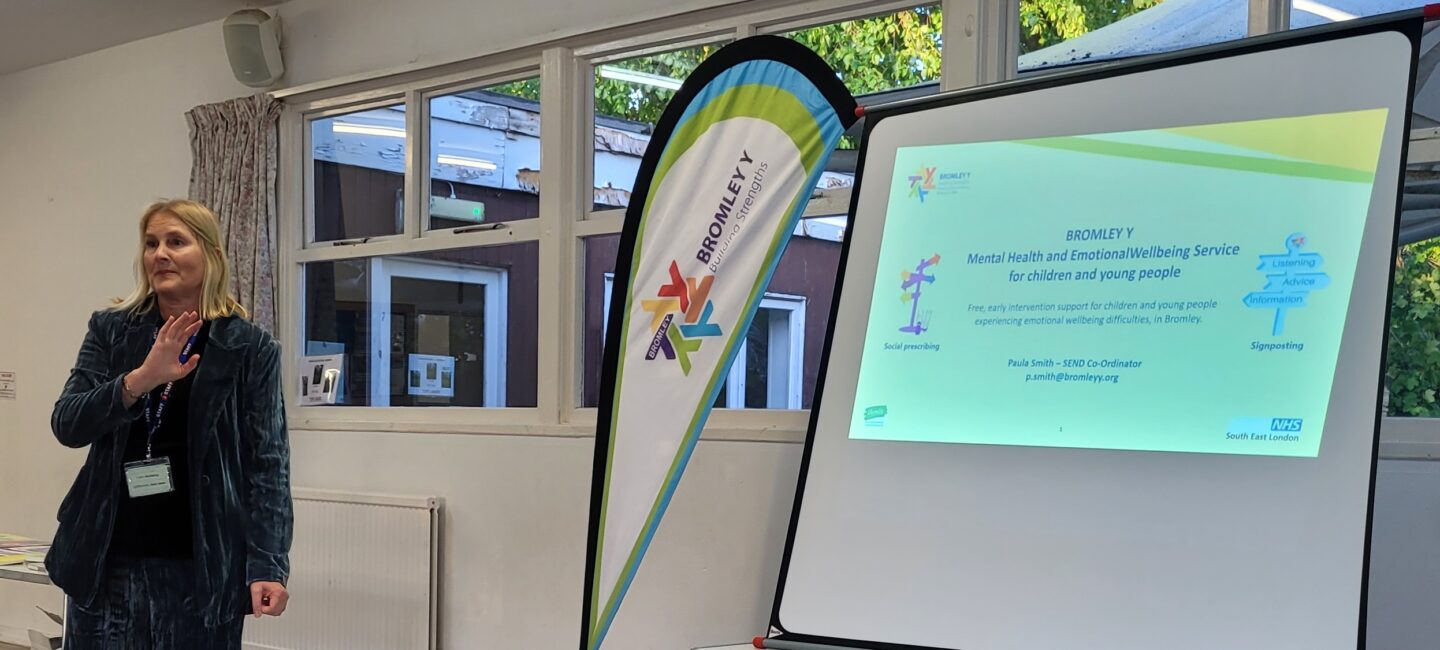
These priorities were recently reflected in the work of our Special Educational Needs Co-ordinator, Paula Smith, who presented at an event hosted by the Dyslexia Association of Bexley, Bromley, Greenwich and Lewisham for its members.
Paula shared her expertise and practical insights on supporting children and young people with dyslexia and additional educational needs, helping to raise awareness and promote emotionally informed approaches to inclusion and wellbeing.
Her presentation explored a range of important topics, including:
• Fight, flight and freeze responses
• Recognising signs of anxiety in children and young people
• Executive functioning and working memory
• Energy accounting
• Rejection Sensitive Dysphoria (RSD)
• Practical strategies for supporting children and young people, including effective communication and liaison with schools
The session highlighted the growing recognition within SEND reforms of the importance of early identification, holistic support, and understanding the emotional experiences of neurodiverse children and young people.
We are proud to see our team contributing to important conversations that support better outcomes for children, young people, and families across our communities.
Questions from members included topics such as: how to ensure the correct accommodations were in place, how to support your child or young person if they don’t want to be seen as different or have support in school. How to support masking.
Following the presentation participants were asked to complete a short feedback form with the following results:
100% felt that they had a better understanding of the link between dyslexia and anxiety
100% said that they had more ideas and strategies on how to support their Child/Young person with Anxiety
100% said they have a better understanding of how to support their Child/Young person to understand themselves and their needs
100% said they felt they would be able to support their Child/Young person to feel confident being who they are
Suggested new content for the information session moving forwards were:
• Better coping strategies in the moment of anxiety or fight/freeze
• Access arrangements
• Exam coping strategies
• How to manage poor sleep with a child with anxiety, mindfulness techniques etc
Following the event, Lindy Springett, Chair of the Association, thanked Paula for her presentation, saying:
“We would all like to thank you very much for your wonderful talk last night. It was so good, relevant and helpful. Also, different inasmuch as it drilled down into the really dire difficulties that dyslexic/neurodiverse children (and adults) suffer with the present education system, rather than just the educational difficulties themselves.
You showed such empathy and understanding, and your manner of presentation encouraged great participation from the audience who obviously felt comfortable and understood. I’m sure the information you gave us all will very much help the parents and their children, as such understanding of their difficulties and explanation of their behavioural reactions was so clearly elucidated. It will also have been a great help to the parents as to how to react and cope with their children’s stress and anxiety.”
Louise Wolsey, CEO of Bromley Y, added:
“Thank you to the Dyslexia Association for inviting Bromley Y to bring the emotional wellbeing aspects of dyslexia to the fore, and for continuing to champion awareness, understanding and support within our communities. I also wish to thank the Association, and Lindy Springett for their kind donation to Bromley Y.”